

There’s this moment every natural-minded mom hits — one minute you’re minding your own business, the next you’re squinting at a label and seeing:
Fragrance. SLS. Methylisothiazolinone.
And your very rational response is:
“Oh great. So even my dish soap is plotting against me.”
And suddenly everything in your house feels dangerous.
The cleaners.
The plastic cups.
The mattresses.
Even the shampoo you’ve been using for ten years.
It’s overwhelming.
And expensive.
And if you’re anything like me, there’s this imaginary version of you tearing through the house like a detox tornado… while the real you is thinking, “Okay, what can I swap today that doesn’t require a second mortgage?”
This post is for that version of you — because it is possible to have a low-toxin life and keep your sanity intact.
Why the Whole Low-Toxin Thing Feels Huge
A few generations back, homes were cleaned with vinegar, soap, sunlight, and elbow grease. Then the post-war boom rewired the whole system. Convenience became king. Manufacturers promised “better living through chemistry,” and suddenly every problem had a brightly colored, sweet-smelling solution. Stain lifters. Air fresheners. Foaming this, antibacterial that.
It felt like progress. No one asked what was in the bottle as long as it seemed to work.
Fast-forward a few decades, and those ingredients have multiplied. What used to be a handful of basic cleaners is now an entire aisle of products packed with:
- endocrine disruptors
- synthetic fragrances
- petroleum-based solvents
- microplastics
- dyes
- preservatives
- flame retardants
The crazy thing is this shift happened so gradually that most people didn’t even notice. There was no clear turning point where someone got on a loud speaker and announced, “By the way, your home routine is about to get chemically complicated.”
So of course it feels big. Of course it feels like you’re trying to decode a language no one bothered to teach you.
But the beauty of starting now is that you don’t have to overhaul everything you touch. You just start noticing. One label. One product. One swap that feels doable today.
And little by little, the overwhelm will start to lose its edge.
The “Big Three” — Start With The Things That Make the Most Difference
Most families see the biggest health shifts by focusing on three basic categories:
- What You Breathe
- What touches your skin the most often
- What touches your food
What You Breathe
Cleaning sprays. Candles. Dryer sheets. Room “fresheners.”
Many people are unaware that indoor air can be 2–5× more polluted than outdoor air. And this doesn’t even mean your home is dirty!
Indoor air is more heavily polluted because it’s sealed.
These are some simple swaps my family has made that make a huge difference:
- We use fragrance-free laundry detergent
- Traded dryer sheets for wool dryer balls
- We actually make our own vinegar or Castile soap cleaners. We use them for almost everything we can spray to clean
- For nice smelling air, we diffuse essential-oils or boil herbs like cinnamon and orange peels instead of lighting heavily scented candles
- And this one is one of the biggest and simplest: EVERY day we open the windows and doors in the house for at least 10-30 minutes to let air go through. Shorter when it’s cold. But airing out the house is SO important for reducing pollution inside.
No perfection required.
What Touches Your Skin Most Often
Most people skip right past this part of low-toxin living, but it’s one of the most impactful places you can start.
Skin isn’t a brick wall — it’s more like a delivery system.
Anything that sits there long enough has a direct line into circulation, hormone signaling, microbiome balance, and inflammation pathways.
And because these products touch you every single day, they have a deeper impact on your health than whatever mystery ingredient might be hiding in a random appliance.
Body wash
Many commercial washes rely on sodium laureth sulfate, artificial fragrance, and petroleum byproducts.
These are linked to disrupted microbiome balance, increased inflammatory load, and respiratory exposure from fragrance molecules that linger in the air.
Switch with: fragrance-free or essential-oil–scented washes that use simple surfactants (coco glucoside, castile), no petroleum derivatives, no synthetic fragrance blends.
Lotions
What goes on your skin stays with you. Lotions sit for hours, giving preservatives, artificial fragrance, and synthetic emollients plenty of time to absorb.
So while you moisturize your skin, you’re also letting in an unpaid guest who wanders straight into your endocrine and immune pathways and starts rearranging things like they’re furniture.
Switch with: real oils (tallow, jojoba, coconut), beeswax-based balms, or short-ingredient formulas without synthetic fragrance.
What you leave on your skin is engaging in your body’s chemistry all day. Choose well.
Deodorant
Underarm skin is thin and absorbent, and it sits directly over clusters of lymph nodes.
Aluminum salts, PEG compounds, and synthetic fragrance don’t just stay on the surface — they move into a system designed to circulate and filter. Long-term exposure can influence immune function and natural detox pathways.
Switch to: aluminum-free deodorants using magnesium, arrowroot, or zinc. Your lymphatic system will thank you.
Shampoo
The scalp absorbs more per square inch than almost any other part of the body.
Mainstream shampoos often include sulfates, phthalate-based fragrance, and preservatives linked to oxidative stress and disrupted cellular repair.
Switch with: sulfate-free formulas, simpler shampoo bars, or castile-based options.
Baby products (your biggest return on investment)
Baby skin is thinner, more permeable, and far more vulnerable to chemical exposure. Many baby washes and lotions still include fragrance, parabens, and petroleum derivatives — ingredients associated with altered microbiome development and immature immune responses.
Switch with: water + washcloth for most cleanups, clean oils (olive, coconut, tallow) for moisture, and fragrance-free products when needed.
Your baby’s detox pathways are still developing. Give them the best start!
Menstrual care
Tampons and pads sit against highly absorbent mucosal tissue.
Bleached fibers, fragrance, and superabsorbent gels can introduce compounds linked not only to altered estrogen activity, but also to increased inflammatory markers and cancer.
Switch with: 100% cotton pads/tampons, organic options, reusable cups, or cloth pads.
Mucosal tissue absorbs at a dramatically higher rate than regular skin directly into the bloodstream. It’s an absolute game changer to get this right.
These daily-contact products shape your internal environment more than almost anything else in your home.
When you swap the things your body meets every single day, from the outside, it might look like you’re drifting into super crunchy-diva land.
If so — no shame. Wear that badge with a strut.
Your body and your family’s health will pay you back a hundred times over.

What Touches Your Food
This one is sneaky, but also incredibly simple to shift.
- choose glass or stainless steel containers over plastic for leftovers
- replace one plastic cutting board with wood
- use stainless pans or cast iron for most cooking. My family have recently switched to carbon steel and we love it. It looks and cooks like cast iron, just lighter, smoother, and faster to heat. • store acidic foods (salsa, tomatoes, soup) in glass jars
No need to throw your whole kitchen away — just shift gradually.
When You’re Ready for the Next Level
At some point, the simple swaps stop feeling like work.
You’ll catch yourself thinking, Okay… what else can I improve without going overboard? When that day comes, these are easy wins to tackle one by one:
- choose a water filter
- replace a mattress (or your child’s) with a natural materials option when it’s time for a new one
- upgrade pots and pans as they age
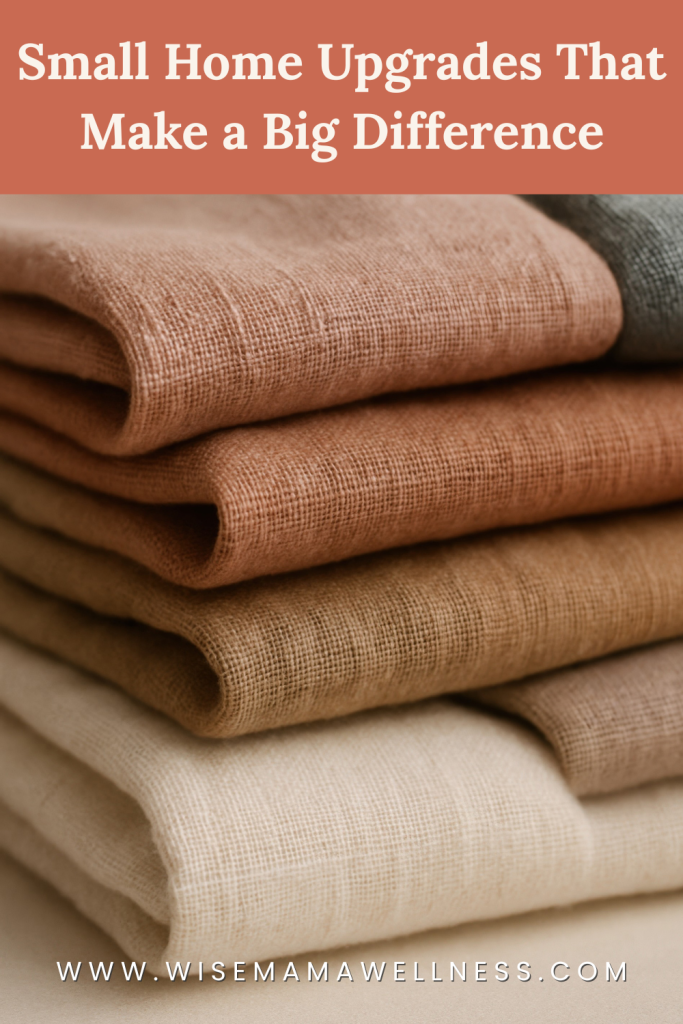
- Swap out old clothes with 100% natural fibers like linen, cotton, wool, and hemp
This is how a healthier home is built — steadily, not suddenly.
What I Wish Someone Told Me Earlier
A low-toxin home is not created through panic.
It’s built through patterns.
The products you use every day matter.
The things you touch constantly matter.
The stuff you breathe matters.
Everything else will come in time.
You don’t need a perfect home this VERY minute.
You do need an intentional one.
And you’re already building that.
Make it Simple
If you want the simplest place to start upgrading your home without feeling overwhelmed, my Natural Wellness Cabinet post walks you through the exact herbs and remedies worth keeping on hand — and which ones you can ignore entirely.
(It’s the natural-living version of a cheat sheet.)
And if you want one low-toxin upgrade that won’t ambush your budget, my DIY Liposomal Vitamin C recipe is basically the overachiever of home remedies — clean ingredients, zero additives, and no “why does this bottle taste like plastic?” aftertaste.
And by the way, if your house ends up smelling like a mix of sourdough starter, vinegar spray, and toddlers… congratulations, you’re doing it right.
Leave a Reply